
How Migration Shapes Our Sense of Self: Identity, Belonging and Finding Home
Walking through the Fenix Museum of Migration in Rotterdam, I came across a glass box filled with colourful faces made from play dough. The portraits were created by artist Efrat Zehavi, who spent time with the people behind them, listening to their stories and asking them a seemingly simple question: Where are you going?
Zehavi noticed that when people were asked where they were going, they often started by talking about where they came from.
I found this interesting because, at first glance, ‘where you are going’ and ‘where you come from’ seem to point in opposite directions. One looks ahead, the other looks back. Yet it is difficult to think about where we are going without first understanding where we have been.
Moving abroad personally, from Iran to the Netherlands, has made me think about how much of the place we leave behind continues to influence the way we live, even when we're no longer there.
The places we come from shape us in ways we don't always notice. They influence how we see ourselves, how we relate to others, and how we understand the world around us. When we leave one place to build a life somewhere else, we don't simply leave all of that behind.
So, what do we carry with us when we leave home? And how does our relationship with the place we came from influence our ability to build a new life somewhere else?
How the Places We Come From Shape Who We Are
The places we've lived in become part of our lives in different ways. They shape our sense of identity and belonging, influence our relationships and social codes, and can affect how we understand our place in the world.
Below, I suggest three dimensions of one’s self that I believe places influence. These dimensions overlap, of course. But looking at them separately might help us understand the different ways our sense of home develops and why leaving a home can affect us so deeply.
Personal Dimension: How Places Shape Our Identity
We often think of places as the settings in which our lives unfold. But over time, they can become much more than a backdrop. They become part of our personal stories: the places where we grew up, fell in love, experienced loss, took risks, made mistakes, or discovered something new about ourselves. A childhood home, a familiar street, a favourite café, or a landscape we once knew by heart can hold memories of who we were at a particular moment in our lives. Therefore, places become part of our personal stories and identity.
Our relationships with places are emotional, too. We can associate them with comfort, freedom, love, fear, shame, loneliness, safety or grief, depending on what we experienced there. Over time, these memories and feelings can create a bond between us and the places that we once lived in. This bond can contribute to our sense of being at home: not simply being somewhere familiar, but feeling connected to it in a way that makes it meaningful to us. It can also shape our sense of belonging, although belonging depends on our relationships with other people and whether we feel accepted, too.
In this way, the places we have called home can become part of our sense of self. Even when we leave, our connection to those places may continue to influence how we understand ourselves and how we experience the next place we call home.
Socially: How Culture and Community Shape Belonging
From our earliest family relationships to friendships, neighbourhoods, schools, workplaces, religious communities, cultural groups, institutions, and wider political systems, we grow within networks that teach us, explicitly and implicitly, how people are expected to live together.
We learn what counts as respectful, what should remain private, what family members owe one another, how children speak to adults, and so much more. The communities and systems we're part of carry norms, beliefs, stories, values, roles, and expectations. Through them, we develop a sense of social identity: an understanding not only of who I am, but also of who we are.
When we move to another place, some of these unwritten rules may no longer apply in the same way, and that can leave us wondering how we fit in.
Spiritually: How Our Roots Shape Our Sense of Meaning
Across cultures and throughout human history, people have found ways to locate themselves within something larger than the individual self. For some, this comes through religion or faith. For others, through relationships with ancestors, ritual, land, nature, sacred places, traditions, or a sense of purpose.
These connections can give us a feeling of continuity: that we're part of something that began before us and may continue after us. They can help us make sense of our lives, understand what matters to us, and feel connected to something beyond our immediate circumstances.
The places we come from can shape these connections, too. They may influence the traditions and faith we practise, the landscapes we feel drawn to or the ways we find meaning in everyday life.
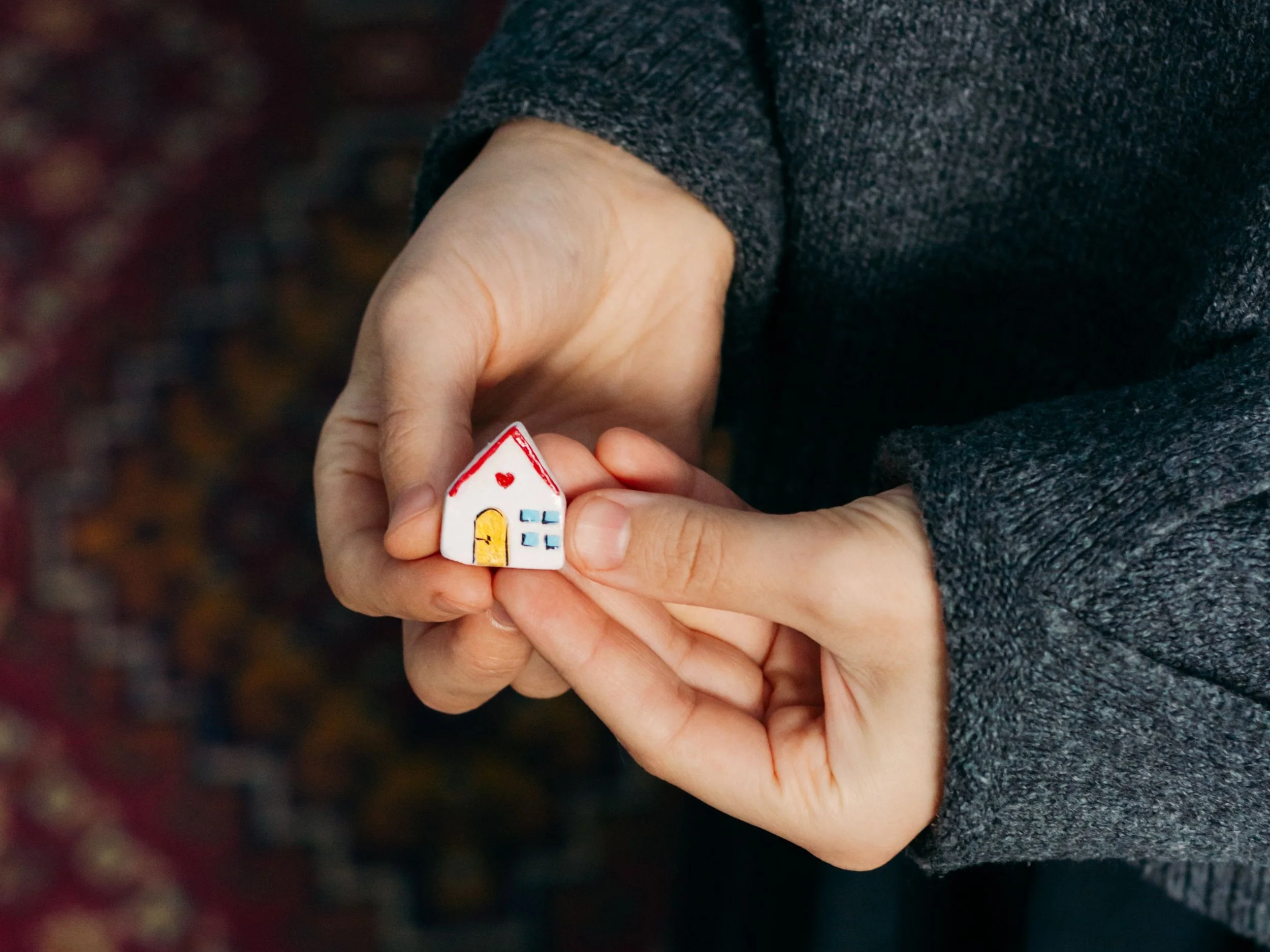
Together, these personal, social and spiritual dimensions help explain why leaving a place can affect us so deeply. They also help us understand why building a new sense of home is about more than simply settling into a different country.
Finding a Sense of Home After Moving Abroad
When we move abroad, our relationship with our previous home doesn't just disappear. Depending on our experiences there, we might want to let go of parts of it, hold on to what's familiar, or find a different way of relating to it. We may even move between these responses at different stages of our lives.
None of them is necessarily right or wrong. But understanding why we respond in a particular way can help us figure out what we need as we build a life somewhere new.
Letting Go After Moving Abroad
Sometimes, after moving abroad, all you want is distance. You might want to get away from painful family relationships, expectations that made life difficult, cultural norms that felt restrictive, or an identity you no longer want to be defined by.
But leaving a place doesn't automatically mean leaving everything connected to it behind. You can move to another country and still find yourself responding to situations in familiar ways. You might continue trying to meet expectations we no longer agree with, feel guilty about making different choices, or struggle to set boundaries even when you finally have the freedom to do so.
Sometimes, the things you want to leave behind have become so much a part of you that you don't immediately recognise them. Therefore, it can help to look at these parts of yourself with a little curiosity. A belief, behaviour, or way of relating to others might have served a purpose at some point in our lives, even if it no longer serves you now. Perhaps it helped you feel accepted, avoid conflict, or cope with a difficult situation.
Understanding this doesn't mean you have to keep doing things the same way. But it might help you move forward without spending all your energy fighting against parts of yourself you don't like.
You might ask yourself:
What am I trying to leave behind from the place I come from?
What did it once protect me from?
What has it cost me?
And what might become possible if I no longer needed it in the same way?
Letting go doesn't have to mean rejecting your past. It can mean recognising what shaped you, understanding what you learned from it, and deciding what you want to do differently.
Moving abroad can give you physical distance from your previous lives, but cognitive and emotional distance often takes longer.
Holding On to Familiarity: Comfort, Homesickness and Change
Moving countries can also mean losing familiarity almost overnight. Maybe you were funny and expressive in your first language but find yourself becoming quiet in your second. Maybe you had a strong professional identity before moving and now have to rebuild your career. Or perhaps people used to understand your humour, gestures, food, religion or family traditions without you having to explain them, and now you find yourself explaining these parts of yourself again and again.
When so much around you is unfamiliar, it's natural to look for something you already know. You might stay close to familiar people, cook food from home, speak your first language whenever you can, or seek out an immigrant or expat community where you feel understood.
Sometimes, sticking to what you know protects you from the uncertainty of trying something new. But it can also mean missing out on opportunities to build relationships and discover things you might enjoy. This can be particularly difficult when you're dealing with homesickness, culture shock, or loneliness. When life already feels unfamiliar, stepping further outside your comfort zone might be the last thing you want to do. There is nothing wrong with this. Familiarity can be a real source of comfort when you're adjusting to a new country. The difficulty begins when it becomes the only place where you feel comfortable enough to be yourself.
So, the next time you find yourself choosing what feels familiar, it might be worth asking yourself:
How does the unfamiliar make me feel? Is it fear, embarrassment, uncertainty, curiosity, or something else?
What does sticking to familiarity give me? Is it comfort, connection, a sense of identity, or the feeling that I can finally relax?
What's one unfamiliar thing I could try today that feels manageable?
Maybe it's ordering something in the language of the country you moved to. Maybe it's attending an event alone, accepting an invitation, speaking to someone outside your usual circle, or simply allowing yourself to be a beginner at something again. You don't have to give up what feels familiar to settle into a new country. Sometimes, you just need to give yourself the chance to become familiar with something else, too.
Reshaping Home and Identity After Moving Abroad
What if you don't have to choose between holding on to your old home and letting it go? You can also reshape your relationship with it.
Living in another country gives you the opportunity to look at things you once took for granted. You might realise how much you value certain traditions, relationships or ways of living. You might also notice things you no longer agree with or want to carry forward.
At the same time, your new surroundings introduce you to different ways of doing things. Some might challenge your assumptions, while others might feel surprisingly right for you. Perhaps living abroad has made you appreciate a different approach to work-life balance, personal boundaries, or independence. You don't have to embrace everything about your new country, just as you don't have to hold on to everything about your country of origin. Instead, you can ask yourself:
What have I learned from my previous home that I want to carry with me?
Is it hospitality, closeness to family, generosity, resilience, music, language, spirituality, humour, or a strong sense of community?
Then ask yourself:
What would I like to take from my new home?
Is it greater independence, stronger boundaries, a different relationship with work, or a new understanding of what a community can look like?
And finally:
What kind of home can I create when I allow both places to shape me?
Reshaping your sense of home doesn't mean betraying where you came from. Adopting something from your new country doesn't mean rejecting your own culture. And changing your relationship with your past doesn't erase what it meant to you. You can keep the things that matter to you, question the things that no longer fit, and make room for new experiences that change how you see the world.
Finding a sense of belonging after moving abroad isn't about deciding which place is truly yours. It's about finding a way to live with the different parts of your story and identity, even when they don't fit together perfectly.
Where Are You Going? Finding Home Between Two Worlds
Coming back to the faces in the glass box at the Fenix Museum of Migration and the observation by Efrat Zehavi that first caught my attention: when people are asked where they're going, they often begin by talking about where they come from.
We look back because our past gives us a starting point for understanding what comes next. It helps us recognise what we want to keep, what we want to change, and what we might still be figuring out.
There was another detail about Zehavi's artwork that stayed with me: the faces were made from modelling clay, a material that can be reshaped. I like this as a way of thinking about identity. When we move to a new place, we don't arrive as blank pages. We bring our memories, relationships, habits, and beliefs with us. But our identities aren't fixed, and our stories aren't finished. The people we meet, the communities we join, and the lives we build in our new country become part of our story, too.
We keep figuring out our lives as we go, shaped by the places we've been and the person we're still becoming.
Support With Identity Transition Through Your Migration Journey
Are you an immigrant, expat, refugee, exile, migrant, or simply someone who has left a home to build another, and are finding your way in how to move between the worlds you live in and come from?
My work focuses on life transitions, identity and relationships challenges. I can support you to explore what matters to you, make sense of the changes you're experiencing, and find your own way forward while staying connected to who you are.
I offer online support or in-person support to expats, immigrants and exiles located in Rotterdam, The Netherlands.
If reading this article has sparked curiosity, reflection, or a quiet sense of readiness, you can book your free consult with me here.
